What is Three Things all about?
We are inviting every parish to join in a renewed commitment to God’s mission – right where you are, in your own context.
Our Three Bold Outcomes are our shared vision for 2030, but the journey starts with each parish and deanery discerning and committing to your Three Things that will move us towards that future.
Our diocese is shifting the focus of planning and support closer to the local church, helping to give you the tools and encouragement to lead mission in your community.
But we can't do that without your help. We want to know what you are doing in your community towards leading mission – that's where Mission Action Plans come in, helping you to identify what your three things are.
"Join me in thinking about Three Things. Three steps of faith. Three ways your church can make a difference for the Kingdom of God in this season."
Bishop Rose
Thank you
Thank you to all the parishes and benefices who let us know their ‘Three Things’. We have had a brilliant response with prayerful submissions and it has been particularly exciting to see how our diocesan bold outcomes are being reflected locally.
Update - March 2026
Some clear themes are emerging across our diocese:
1. Children, Youth and Families
Parishes want to prioritise children and young people, yet many have limited volunteer capacity, fragmented provision, and uncertainty about how to start or scale up.
2. Local mission and community engagement
Using local mission, school partnerships, and hospitality/open community spaces as the primary routes for evangelism and discipleship.
3. Leadership and enabling support
Churches have asked for coaching, team building and focal leaders. Parishes value “critical friend” conversations to focus effort on what truly grows mission.
4. Buildings as both obstacle and opportunity
Many submissions raise building constraints (fabric, faculty, cost, grade listings) and ensuring buildings serve mission rather than distract from it.
5. Data informed planning
Parishes are asking for timely feedback and deanery level summaries of their ‘Three Things’ as well as Health & Vitality Review (HVR) data.
We have begun to weave this into the strategy documents which are now being prepared.
These documents will not only help inform any funding request we submit to the National Church Institutions but demonstrate the inspiring work taking place in every parish in this diocese. As they are finalised we will share them as widely as possible.
Supporting local
Our diocesan strategy is very simple at heart: we want to enable every local church to share in God’s mission. Everything we are doing — the consultations, the Three Things, the Health and Vitality Reviews, the investment in leadership and young people — is about strengthening parishes where they are and ensuring no parish or community is left behind.
We’ve listened deeply across the diocese. Parishes have told us they want support with children and young people, clarity about their priorities, help with buildings, encouragement in leadership, and practical resourcing for mission.
In response, we’re putting in place a whole ecosystem of support: Mission Enablers working with parishes on their plans; resource churches and healthy parishes supporting others; new Christian communities emerging where there is opportunity; training and development for clergy and lay leaders; and targeted investment in places where attendance is low or where communities are most fragile.
The Three Things process is now at the heart of how we work together. Each parish discerns its priorities, deaneries gather the picture across their area, and the diocese responds with the right support — whether that’s leadership development, financial guidance, missional partnerships, youth ministry expertise or buildings advice. It’s a shared conversation that keeps mission central and keeps us aligned.
The future we’re working towards is one where children and young people are confident disciples; where new worshipping communities help us reach those we’re not currently reaching; and where every parish, however small or rural, is showing signs of revitalisation. This is not about creating a few big centres — it’s about growing the whole ecosystem of mission across mid and east Kent. It’s about changed lives that change lives.
Above all, the strategy depends on us working together — clergy, lay leaders and congregations — with a renewed sense of hope, purpose and partnership. And as we step forward in faith, we trust that God will continue to grow, renew and sustain the church in this diocese.
Mission Action Plans (MAPs)
 Your MAP is a simple but powerful way to:
- Discern where God is already at work.
- Focus on realistic, honest priorities.
- Review what’s making a difference (and what’s not).
- Share ideas and identify what support you need from us.
It’s not an extra task – it’s naming what you’re already doing, what’s next, and what may need to stop.
We asked parishes to submit their MAP by the end of December 2025 to allow us to plan the best way to allocate our resources to support you at parish level.
If you missed the deadline, we'd still like to hear from you:
Submit your MAP to us or fill in this form and email to threethings@diocant.org.
Further support - resources
3 Things: Simple Guide – A simple starter guide to get your Three Things thinking underway
3 Things: Parish Toolkit – Tools and resources to support you with your Mission Action Planning
3 Things: Reimagining Mission – Inspiration for thinking wider about your Mission Action Planning
3 Things: Ideas from the Generous Giving Team – Ideas for what your Three Things could be
3 Things: Introductory webinar – YouTube video link
3 Things: Discipleship Pathways – A diagram of steps to enabling leaders
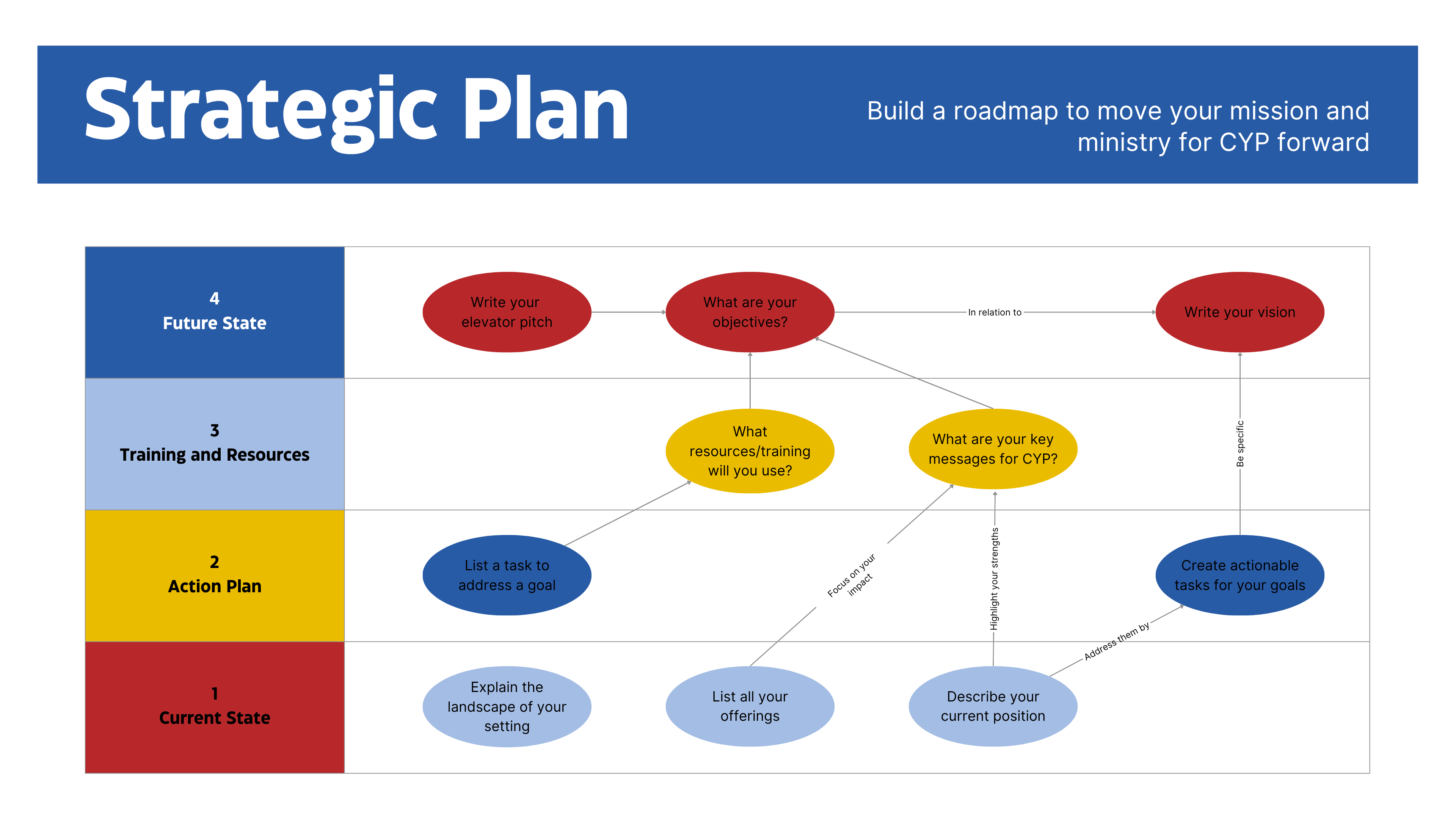
3 Things: Parish Children and Young People (CYP) Roadmap – Build a roadmap to move your mission and ministry for CYP forward
Frequently asked questions
I have submitted my parish form, what happens next?
Thank you! We have shared responses in the Briefing and are now incorporating the results into the strategy documents. The aim is to share these as widely as possible. This is a new approach for this diocese and we hope to strike a balance between recognising individual responses and the importance of the emerging themes.
Does our Three Things form mean we will get funding for projects?
One of the aims of the consultation was to better inform the wider discussions on strategy. It has been inspiring to read what is taking place and being planned in parishes and benefices right across this part of Kent.
We cannot guarantee funding for individual projects, but we can point to the significantly increased opportunities for funding that has been made possible in recent years. An additional £1m has been secured in funding to directly support PCCs in the most deprived areas, we are planning a Strategic Missional Fund and will invite PCCs to apply for funding from that and we are now able to support PCCs with direct grant funding for Minor Repairs and Improvements, Quick Wins funding and hope to be part of a programme that improves accessibility to church buildings.
Who is responsible for Three Things? Is it the PCC, incumbent, churchwardens?
The Three Things need to be owned by the PCC rather than any individual so all should be consulted, even if the task of filling in the form is delegated to one person.
What is the difference between MAP and Three Things?
One and the same! Mission Action Planning is something that has been encouraged and practised for many years in our diocese. Three Things is a simple way to capture this information as a snapshot of what is happening in our diocese in Autumn 2025. Some parishes may not be doing MAPing and one of their Three Things could be to find out more and start.
Should the Three Things be for a benefice or parish?
It should be whatever makes most sense in your context. There is no need for separate forms from each parish if the benefice is submitting a form on behalf of all.
Should the Three Things be aligned to the 3 Bold Outcomes?
Ideally, because most mission activities will fit within the broad headings of revitalisation, young disciples or new communities. However if your church is being called to do something that doesn’t fit directly into the Bold Outcomes we would like to hear about it. You don't need to shape your Three Things to the Bold Outcomes if it isn't a natural fit.
Should our Mission Action Planning go as far as 2030 to tie in with the 3 Bold Outcomes?
2030 is the diocesan timescale for our Bold Outcomes as agreed at Diocesan Synod. Your MAP and Three Things don’t need to fit this timescale, it should be whatever makes sense for your church and context.
What is the role of the deanery?
Deaneries will have sight of the three things forms from their area. This should help to inform deanery planning and the three-way conversations between the parish, deanery and diocese.
Is there a link between a parish profile and a MAP?
Parishes who have written a parish profile for the recruitment of clergy will have spent a lot of time considering their mission which should make discerning their Three Things more simple.
We don’t have an incumbent. Should we wait until they are in post?
The PCC has responsibility for mission in the parish and for filling in the Three Things form (see above). A new incumbent may wish to make changes once they are in post in consultation with the PCC but it shouldn’t prevent the Three Things being discerned now. The deadline for submission is the end of December 2025.
A three-way conversation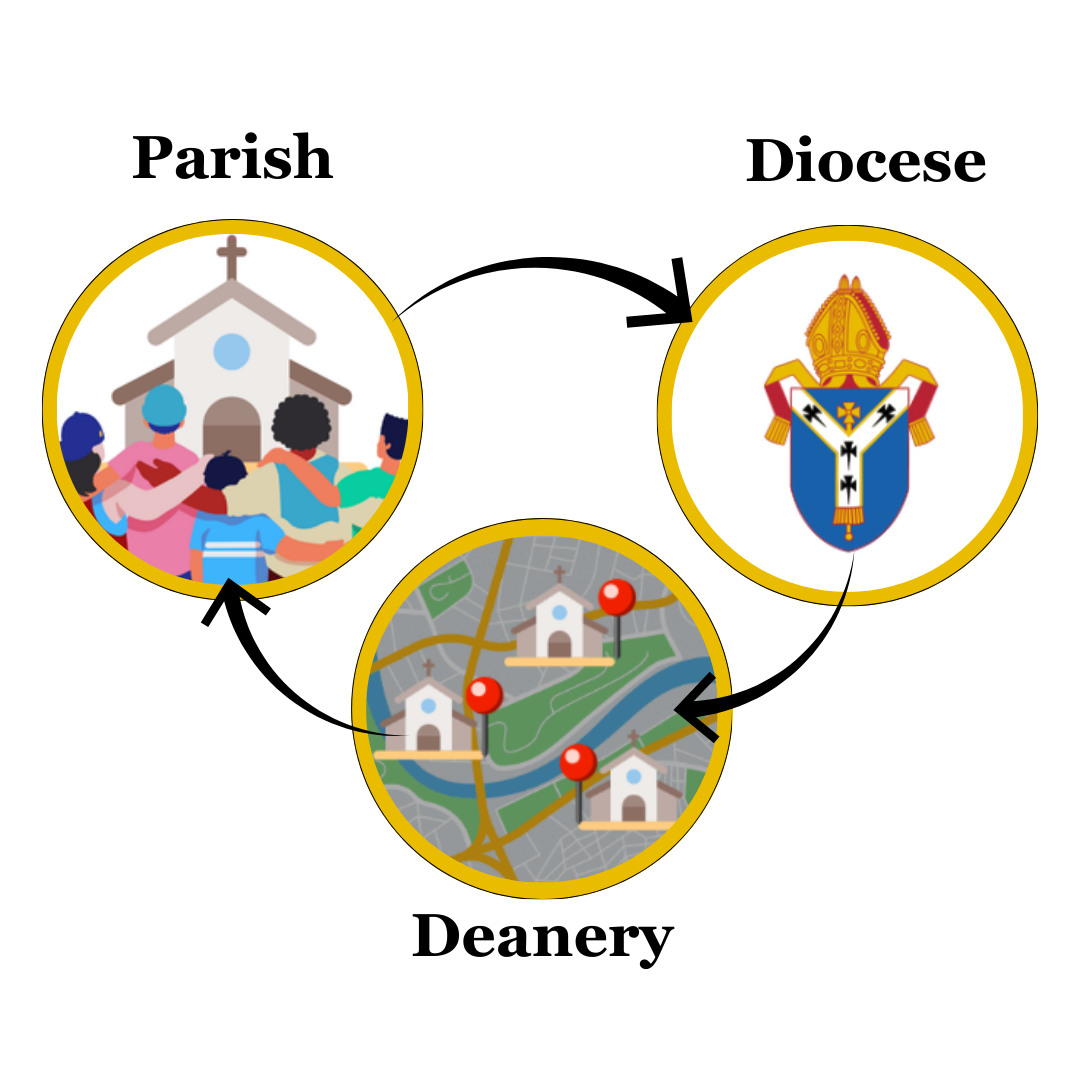
Mission is a shared calling between:
- Parish: You know your people and community. Your MAP leads the conversation.
- Deanery: Helps link MAPs, identify shared goals, and add value.
- Diocese: Supports your plans, shares learning, and finds resources to help mission thrive.
For help with anything to do with MAPing, talk to your archdeacon, email Archdeacons@diocant.org or contact Caroline on 01227 473597.